

Did you know that frizzy hair could be categorized into three different types?
You may be wondering…
Why does this matter?
Well, if you know exactly what type of curls you've, after that you can tailor hair care routine to one that actually suits your particular hair type, and truly make the most of your beautiful curls.
Figuring Out Your Curl Pattern
The three various kinds of curls out there generally refer to three main curl patterns, which is easiest to determine when your locks are healthy, moisturized as well as in its most natural state.
Do you regularly use heated tools on your hair?
If so, your hair will probably have experienced some heat damage, which means you might be best off refraining from using heated tools for a couple of months in order to really get a good idea of your curl type.
If the roots of the hair seem much curlier compared to ends, this is really a sign that the hair has experienced heat damage. The only method to really figure out your curl pattern would be to give your hair some time to heal, allowing your natural curls to return all the while cutting away any damaged ends.
Wavy Hair
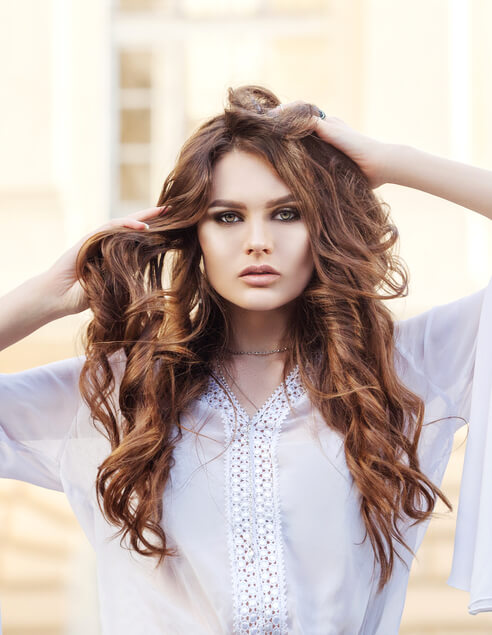
The first type of frizzy hair is wavy hair, which is also referred to as Type 2, and this is commonly defined by S-shaped waves instead of tighter curls.
However, wavy hair by itself can in fact be further categorized into three separate types…
The first is Type 2A. This kind of wavy hair features a loose and delicate bend.

The second type is Type 2B. If this is you, hair tends to be straighter in the roots, and then turns into more defined waves around eye level.

Finally, there's Type 2C. These waves start right in the roots, and therefore are extremely defined, with some intermingled ringlets.
Styling Wavy Hair
When you are looking at Type 2A and kind 2B, you shouldn't must many problems when it comes to styling. However, Type 2C tends to be the toughest to style, as this hair type is usually more resistant against tools and products.
One problem that wavy hair types share is frizz, but this can be controlled by using hair products. Make sure that these products you select not only calm any frizz, but additionally hold your waves without weighing them down. Use your fingers to scrunch these products using your hair, as this will help to define your waves a bit more.
A few must-use styling products include:
- Mousses
- Leave-in serums
- Heat protecting products
- Sea salt sprays
Try to avoid using creams or gels whenever possible, and keep both hands from your hair.
Why?
Beceuse the greater you have fun with it and tousle it, the greater it'll frizz up.
Curly Hair
Curly hair, also referred to as Type 3, is full bodied, easily vulnerable to damage, and climate dependent, meaning that the greater humidity it experiences, the frizzier it will likely be.
Just like with wavy hair, curly hair could be split up into three further types…
To start with, there is Type 3A, which refers to larger curls.
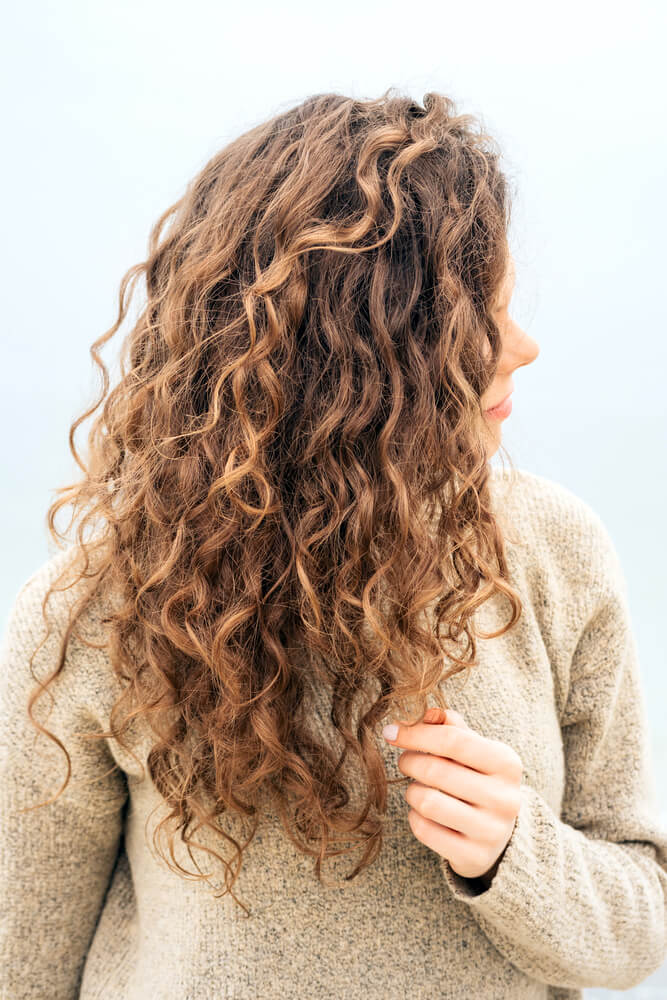
Next up is Type 3B, which may be medium sized curls, about the circumference of the marker pen.

Finally, there's Type 3C, which are tighter, corkscrew curls, and tend to have more volume compared to other two curl types.

Styling Curly Hair
Curly hair tends to be probably the most temperamental type of hair, which can make styling quite the task. Using too much product will leave your hair having a greasy sheen, while using the not enough product will result in a head filled with frizz.
To enable you to care for and style your frizzy hair, here are a few tips:
- If you use a conditioner to de-tangle hair, try using just your fingers instead. This will cause less breakages, and helps make the job slightly easier.
- Curly hair is prone to drying out easily, so use a shampoo that is free of sulfates, accompanied with a light moisturizing conditioner
- If your sulfate-free shampoo still appears to be too harsh for your hair, try diluting it with a bit of distilled water
- Be gentle when shampooing your hair, working the right path through small sections at any given time. Make sure that you won't ever rub or scrub at the hair, and steer clear of piling it all on top of your head while shampooing
- When using styling products in your hair, ensure that hair continues to be cleaned, conditioned and moisturized, so that you are beginning having a fresh palette
While everybody ought to be deep-conditioning their hair once in a while, those who have Type 3C hair need to do this when a week, as this will help to retain elasticity.
Another way to retain moisture while reducing frizz is as simple as sleeping on a silk pillowcase. This will cause less friction than a cotton pillowcase would each time your hair rubs against it, preventing any snags and bunches from occurring.
If your curly hair appears to get tangled far too easily, it may be worth trying a pre-shampoo treatment. This is a formula that you add to your hair before shampooing it, and can really help to de-tangle hair after it has been washed.
Kinky Hair
Kinky locks are known as Type 4, which haired is tightly coiled and wiry. It's also quite fragile and delicate, and, being naturally dry, needs additional moisture on a daily basis. This can help allow it some elasticity to keep it supple, preventing breakages.
When kinky locks are wet, the curls do not seem to be defined, after which, once it dries, there is quite a bit of shrinkage, and the curls take on a fluffier feel.
Kinky hair could be broken down into three further types…
The first is Type 4A, which consists of small , tight S-shaped curls.

The curls of Type 4B tend to have much more of a Z-shape, as well as a softer, cotton-like feel.

Finally there is Type 4C, which still features Z-shape curls, although not in a very defined way. This hair type can be very varied, being from fine and soft to coarse and dense.

Styling Kinky Hair
As mentioned above, kinky hair is extremely vulnerable to dryness, so it needs daily moisture.
The reason for this is because the natural oils which are developed by the scalp have a much harder time navigating their way through the kinks and twists of frizzy hair, compared to the easy path of straight hair.
A few items that you should use in your hair include:
- Moisturizing cleansers
- Hydrating conditioners
- Rich hair creams
- Moisturizing oils, for example jojoba and coconut
- Leave-in treatments that contain humectants
In relation to actually styling your hair, Type 4 curls work really well with braid-outs, twist-outs and updos.
Why?
Because this haired is really quite pliable and will hold a style much better than Type 3 curls will.
You could also try a few protective hairstyles, which basically conceal the ends of the hair, to ensure that any breakages are minimized. These styles include mini-twists and pompadours.
When you are looking at hair growth, lots of people with kinky hair believe that their head of hair just does not appear to grow fast enough.
However, kinky hair actually grows at the same rate as other hair types, but, because the locks are so tightly coiled, it can take considerably longer to visually check this out added length. You will be aware that your hair requires a trim when the ends start to tangle together easily.
Curl Porosity
In addition to understanding your hair type, it's also wise to be familiar with curl porosity.
This may seem complex, however it isn’t…
It basically refers to the rate where hair has the capacity to suck up liquids.
No idea how porous hair is?
Fortunately, there is a quick test that you could do…
Dunk a bit of hair right into a cup or bowl water, after which decide if it floats or sinks:
- Floats – this means your hair is non-porous, and does not easily absorb product. You should utilize heavier creams to help the ingredients sink in, and really should be deep conditioning your hair on a weekly basis, because it will need the extra moisture.
- Sinks – which means that your hair is extremely porous and will the best liquid liquids easily. You are best off using lighter items that are water-based, as well as items that are full of proteins.
- Somewhere in the middle – hair will probably be healthy and bouncy, as this is considered to be the ideal porosity. A moisturizing shampoo and conditioner should be all that you should keep your healthy locks.
Curl Elasticity
As you'll have probably guessed, curl elasticity refers to how quickly your curls coil back to place when extended.
Why performs this matter?
Because if your curls do not coil back quickly or easily, this means that they do not have much elasticity and could use quite a bit more moisture.
Curl Variance
Another issue that many people with frizzy hair face is curl variance, meaning that their hair consists of more than one kind of curl.
This makes it trickier to create, but there is pointless why you cannot use a bit more product in the sections of hair which include stronger curls. You can also use several hair product, applying specific ones to the parts of your hair that require them.
Co-Washing
Co-washing is something that lots of women with curls swear by.
Never heard of it before?
Co-washing means conditioner washing, which basically means washing your hair having a conditioner instead of a shampoo.
You are probably wondering why someone would do this…
Well, this is really a great way to help curly hair retain moisture, without stripping hair of their skin oils. Conditioners do also have a little bit of cleanser, and therefore they'll still be in a position to wash hair.
However, for those who have naturally oily hair, or are afflicted by a scalp condition for example dermatitis, then co-washing is something you're best off avoiding.
For everybody else, try co-washing hair among regular washes, and find out if the is important to how hydrated your hair is.
Straightening Curly Hair
Of course, there'll always be a time when you wish to combine your style a bit, and may decide to do that by straightening hair.
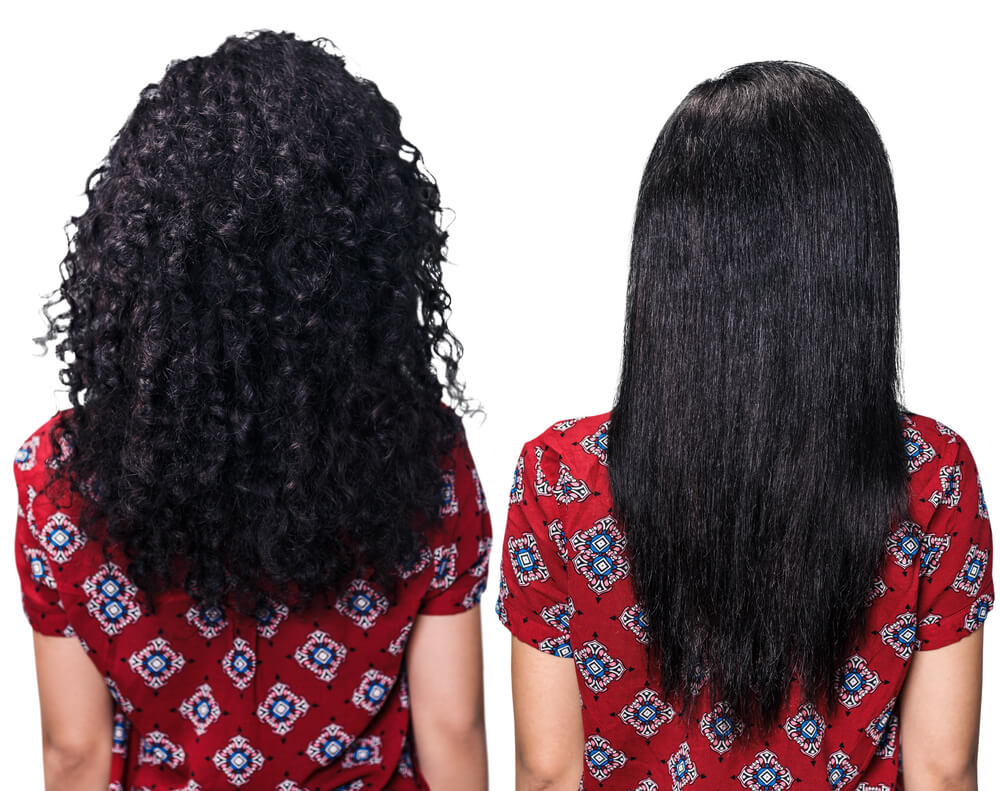
However, if you don't do this meticulously, you are able to wind up causing so much heat damage to your hair, some of which may be irreversible.
Here are a few ideas to keep in mind when straightening curly hair, whichever kind of curls you might have:
- Make certain your hair has been moisturized before beginning, and it is totally dry
- Straighten your hair in sections, so that you can properly reach your roots
- Nourish hair along the way along, either with a heat protection spray or perhaps a light oil
- Invest in quality straighteners so that you do not have to repeatedly go over exactly the same section
- Hold your hair taut while you straighten it, because tension is important when straightening frizzy hair
- Use a finishing product to add some shine and lower any frizz
While alternating between straight and curly hair could be fun, you need to keep this low as much as possible.
Why?
Because curly hair has already been so prone to damage, that you simply really do not want.
As long while you keep the hair dry and protected, your straight hair should last for at least a couple of days, then you should return to being curly for a while.

