
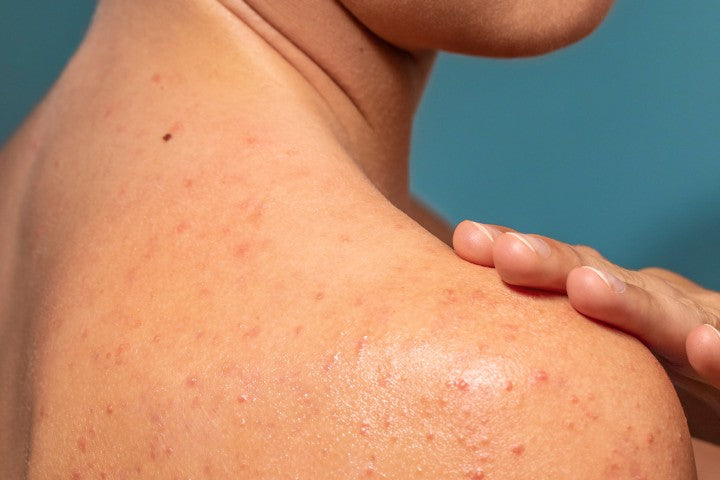
So you've heard everyone referring to them. Complaining about them. But what is do clogged pores even seem like?
In this short article, we're going to show you the best way to identify clogged pores, what causes them in the first place, not to mention, how to treat them.
WHAT ARE CLOGGED PORES?
Clogged pores are essentially pores clogged with the dead skin cells, gunk, and sebum .
But what even is a pore? A pore is really a duct in the skin attached to the sebaceous glands that leave sebum. Check out your skin and you ought to see these little open holes. They're especially visible round the nose area.
“Pore sizes and numbers vary largely by gender, locations on the body, and by ethnicities,” says Tiffany Libby, a board-certified dermatologist. “Like many other traits, they are an effect largely of genetics.”
Oily skin types are prone to experiencing blockages within their pores. And it's this that causes bacteria to thrive, leading to blackheads, whiteheads, and pimples.
WHAT CAUSES CLOGGED PORES?
Two factors: skin debris and cellular turnover.
Dead skin cells and dirt mix with sebum and eventually clog your pores. If the dead skin cell plug oxidizes by contact with oxygen, it'll turn black and become a blackhead. Whether it doesn't, it remains as a whitehead.
That's just one factor. The other is slow cellular turnover, which happens because of increased stress, poor diet, along with a insufficient a good skincare routine. This causes an accumulation of the dead skin cells which can clog pores.
IS IT A CLOGGED PORE OR HAIR FOLLICLE?
You will easily notice in case your pores are clogged if you notice blackheads, whiteheads, or general dullness for your skin.
Many people get mixed up between clogged pores and folliculitis. Folliculitis looks like tiny red, inflamed blemishes that appear to be much like a pimple. They tend to appear on the upper arms and backs of the legs.
“Folliculitis can happen from friction – when your upper arms rub against your clothing, or your legs rub against the fabric of the jeans or shorts, or your tight bathing suit bottoms shift backwards and forwards upon your butt and bikini line,” explains dermatologist Dr. Kate Lowenthal, M.D., a dermatologist.
She adds that your hair follicles can also get infected when you wear sweaty workout gear or when nicking yourself having a razor, which “invites bacteria into the skin easier.”
If you're getting reddish bumps on your arms or legs, it's probably folliculitis. If you're experiencing whiteheads, blackheads, or pustules on your face, chest, back, or butt, it's clogged pores.
ARE LARGE PORES AND CLOGGED PORES THE SAME THING?
Enlarged pores are basically caused by clogging. When your pores are congested with excess oil and dead skin cells, boom the look of pores maximizes.
Large pores can be seen at all ages as well as in all ethnic groups. People with African or Indian ancestry might have larger pores. Pores have a tendency to appear larger with age.
With relation to its gender, little evidence shows whether women or men are more prone to enlarged pores. Studies have shown pore size may fluctuate in females throughout the menstrual period.
Factors that may result in enlarged pores include:
- Increased oil production
- Hair follicle size
- Use of skin clogging makeup products
- Loss of skin elasticity
- Sun damage
- Lack of regular exfoliation
HOW TO GET RID OF CLOGGED PORES
Thankfully, clogged pores can be managed with a few key skincare products. Here is a simple simple skincare routine you can test to unclog pores and keep a clear and radiant complexion.
- Cleanse
Unclogging pores means keeping the skin neat and free of buildup. Wash The face daily with a gentle cleanser to get rid of oil and dirt.
We recommend CBD Jelly Anti-Blemish Facial Cleanser, which is formulated with salicylic acid and retinol to soak up excess oil, remove impurities, and reduce pores. Avoid benzoyl peroxide-formulated products if you have sensitive skin.
- Chemically Exfoliate
Chemical exfoliation includes using exfoliators formulated with ingredients like alpha hydroxy acids and beta hydroxy acids .
According to Dr. Libby, “AHA/BHAs like glycolic, lactic, and salicylic acids will all help exfoliate and dissolve away dead skin cells and debris, minimizing the appearance of pores and preventing them from enlarging.”
Our favorite chemical exfoliant is CBD Jelly Toning Solution, a formula comprised of glycolic acid, hemp, aloe, and tea tree to dissolve dead skin cells and boost cell renewal for clear, calm skin.
- Treat
Charcoal masks are great for absorbing excess oil and removing grime and dirt. Derms swear by using charcoal face masks and other skin products to get rid of blackheads.
However, if you don't have time to start applying masks, try our Black Jelly Blemish Serum instead. This topical acne treatment drains dirt and oil, and zaps away breakouts for a clear and clarified complexion. Apply to the impacted areas daily.
- Address Body Blemishes too
Clogged pores don't merely appear on the face. They can show up on your chest, back, and butt too. Along with regularly chemically exfoliating, we recommend investing in our Bodne Bundle.
The 4-step set includes a body cleanser, moisturizer, mist, and oversized acne patches all formulated with acne-fighting ingredients to deal with clogged pores, active breakouts, as well as acne scars. Make it part of your health to decongest your pores and clarify your skin.
You might be wondering why we've not mentioned anything about pore strips? Well, we prefer dealing with the main of the issue. While pore strips might help out, they merely reach the surface of the skin and do not penetrate deep enough to create a factor.
We advise against trying DIY home remedies to unclog your pores, because these can be quite irritating to sensitive skin. In some instances, they can actually worsen the issue.
When searching for over-the-counter makeup, sunscreen, or skincare products, remember to search for non-comedogenic products, as these don't clog the pores.
Nothing working? Visit your derm!

